Monday, May 4, 2015

Lower Performance Sailplanes Higher Fun for Me

This past weekend I had the opportunity to fly with a few other RC sailplane pilots and it was great. Most of my flying is done alone which is fun but I sure enjoy the time I can enjoy the hobby with other people that are equally enthused.  This wasn’t a contest situation so there was plenty of time to observe the other gliders flying and talk with the pilots, although the contests we have are rather low key. I was flying my rather heavy DLG glider but managed to find good lift a couple of times but it was normally at the downwind edge of the field as the glider flies over power lines, buildings and roads.  Unfortunately I had to leave rather early and the wind came up in the afternoon.


Wayne's Raven


On Sunday the forecast looked favorable for slope soaring but the wind remained rather light most of the time. I returned to the same field but found myself flying alone.  This time I had the Gentle Lady sailplane and launched using a small hi-start designed more for hand launch size gliders.  To me I find more enjoyment in working the thermals from a lower level. Often I need to make many launches before finding lift strong enough to climb in very well but I figure it is good exercise stretching out and retrieving the hi-start.


After many launches I could tell that I had finally launched right into a thermal as the hi-start was really stretching out vertically.  The glider slowly climbed to a good altitude downwind but by now was probably over a road. When the tail was getting small I decided to head upwind, with a lower performance glider this can be challenging also. With so much altitude I was able to reach the other end of the field but lost a good amount of altitude and then couldn’t find another thermal, at just under 5 minutes I was forced to land.


On my next launches I tried to find lift farther upwind but just wasn’t finding it.  After several launches I worked a thermal that was downwind in the danger zone. Before the glider got too far downwind I was going to bring it back.  The penetration of an un-ballasted Gentle Lady isn’t the best and the breeze had come up a little. I was careful to stay to one side of the power lines but all of a sudden I realized my glider was behind a tree, not in front of it. Boom, the awful sound you hear when your sailplane flies into a solid object. 


Luckily the glider wasn’t real high and wasn’t wedged real well in the branches. There were some dead branches under the tree and I threw one upward but missed.  About this time a gust of wind dislodged the sailplane and it came down but I fumbled trying to catch it. The damage was minor, just a crack in the nose, it could have been easily repaired at the field.  A benefit was now I could see my battery was not pushed all the way forward and I could probably remove  that big hunk of clay on the nose for balance.
  

Bill Kuhl
http://www.ideas-inspire.com

Related Article

Upgrading the Gentle Lady

Friday, May 1, 2015

Sky Rocket Rubber Powered Free Flight

Somewhere on the Internet I had spotted a picture of a rubber powered free flight that I thought looked rather unique. It reminds me of the look of spacecraft from comic books in the 60’s.  After posting the picture, George Bredehoft of Volare Products responded that this was a kit his company sells, I ordered one immediately. 


Flying Without Landing Gear


When I was finishing up on the Guillow’s PC-6 Porter I was building, I decided the Sky Rocket would be the next project on the building board. I examined the contents of the kit and  I was pleased with the light laser-cut balsa in the kit. Building the Sky Rocket is somewhat different than other rubber models in that most of the parts are interlocking; because of this the plan included is just for the wing. There is an instruction booklet that shows many of the building steps. I was familiar with type of construction in building radio control aircraft.


After studying over the instructional manual I was building at a really fast pace. When there is less cutting and fitting to do, construction moves along faster. This kit is listed as an embryo kit but this might not be the most competitive design because there is more wood used in the construction than other embryo models, this is mentioned in the kit description. With the propeller/rubber combination included the Sky Rocket will easily climb to a good height.


As I often get anxious to fly a new model I left off the landing gear and decided to fly my newly constructed Sky Rocket, thinking it would save weight and drag. The wing is held on by rubber band so that it can be moved for proper CG location. Without the landing gear I was moving the wing so far back to keep the airplane from going straight up and hanging on the propeller.


After some attempts at flying without the landing gear, I decided maybe the airplane would fly better with landing gear as intended. The kit included landing gear with wheel pants to further enhance the cool look. I was in a hurry again so I fitted landing gear from an old Guillow’s slip together airplane. This changed the CG location so the wing could come further forward at least a half inch. The all up weight with rubber is around 23 grams.


With the landing gear attached to the airplane I was ready for more test flights and pictures. It was rather windy but the Sky Rocket is a stable flying airplane. I had several flights and the climb was near perfect now with no hint of a stall.  The landing gear had broken off on the Phantom Flash I had purchased from Volare, I think I need to repair that to get the Phantom flying better again.

Bill Kuhl
http://www.ideas-inspire.com

Volare Products Website Link for Sky Rocket Kit


Monday, April 27, 2015

Model Aviation Demonstration for Nursing Home

One of the biggest joys in my life is to share the hobbies related to science and engineering with any group that might be interested. Model aviation has been an interest since I was very young but I have been dabbling in other types of models both flying and non-flying. In the beginning my presentations or workshops were all for the younger crowd but I have since expanded to all age groups. In my presentations I have also tried to include aspects of history related to the progression of technology in inventions.


Last Saturday was my first presentation in a nursing home facility, although this group might be a little more subdued in their reactions than the younger groups, I received more Thanks personally from people afterwards. Outlining what I present is the idea of flight as sketched out by Leonardo Da Vinci, proceed to the ideas for rubber model airplanes and helicopters of Alphonso Penaud, discus the others that jumped off  hills in man carrying gliders, describe the work of the Wright Brothers, and the flight of Charles Lindberg.


I have models to represent some of my talk mainly static but I also do some flying in front of them also. To relate the progression of ideas I show how I started with the FPG-9 foam plate glider and expanded on it with more complicated foam gliders and rubber powered airplanes. I brought along a current project of a balsa rubber powered free flight Guillow’s PC-6 Porter to show a more difficult model build.


Maybe more so for fun, I fly a free flight ministick airplanes, a radio control Mini Vapor, walkalong glider, and a small quadcopter.  Anything I fly is very lightweight and slow flying because I am always concerned with safety. The next morning I flew some rubber powered free flight airplanes in the schoolyard next to the nursing home.  Some of the residents were watching this, one of the activity directors thought I could do more outside demonstrations as the weather improves.


Bill Kuhl

Related Links


Sunday, April 26, 2015

Upgrading the Gentle Lady

In converting my radio control airplanes from 72 Mhz to 2.4 Ghz I recently installed a new Spektrum receiver, 2200 mah nimh battery pack, and a switch jack in my Gentle Lady sailplane. It required me to solder on new plugs to the old Futaba servos but that was the only major change needed. I knew the tiny receiver would be lighter but I didn't think it would change the balance as much as it did.


It was a beautiful spring day today with relatively low wind and cloudless sky, I was excited to test the Gentle Lady with the new equipment but I did have the sense to try a couple of hand glides before doing a hi-start launch. It was a good thing because the Gentle Lady climbed at a steep angle and I couldn't push in down elevator fast enough to avoid a stall. As I fly some free flight I had modeling clay along so I taped a big wad of clay under the nose. Another hand toss proved it was back in trim.


The field I was flying from is rather small so I was using a short hi-start designed for hand launch type gliders. I also find it more challenging to grab thermals at 150 feet high instead of 350 feet or so. On the first launch I thought I found lift but it wasn't enough to keep going up. It took several more launches until the Gentle Lady connected with a thermal that kept it rising to a good altitude at which point it was getting far downwind. I had one more good thermal flight but it seemed like a struggle to get over a certain altitude. After landing I watched a turkey vulture struggle to go up in lift, it made me feel like I did pretty good.


Next I got out my Hyper DL for some discus launching. This is a rather heavy DLG and it took a fair number of throws before it was climbing in a thermal. More throws and it was climbing in another thermal, as much as I tried to find the strongest part of the thermal the glider only went so high.  That was fine, it is more fun when it is challenging.

Bill Kuhl
http://www.ideas-inspire.com


Friday, April 24, 2015

Blade Nano BNF Quadcopter

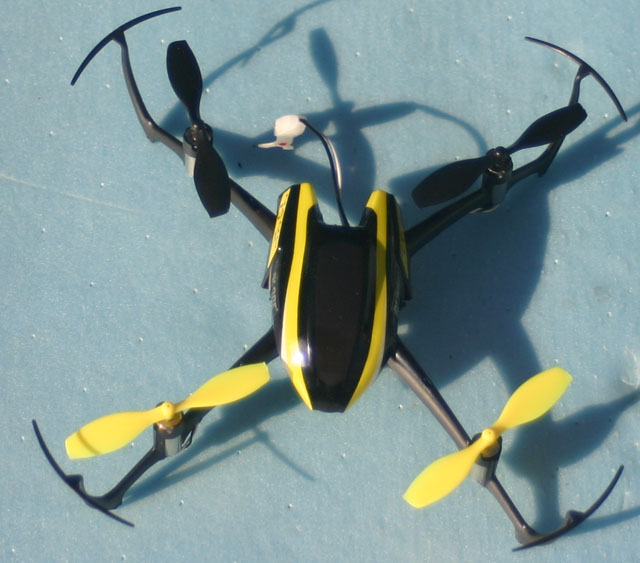
NanoStaticTop
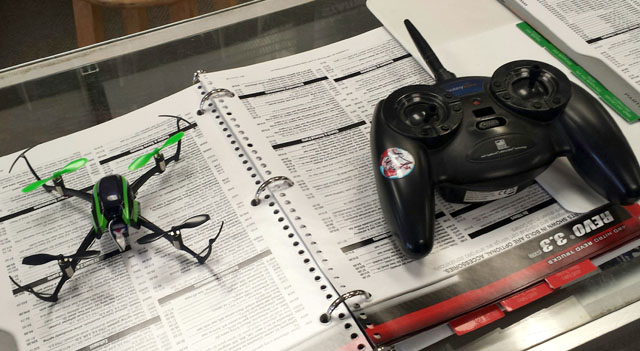
I asked the young sales associate – Nate at my favorite hobby shop Everything Hobby in Rochester Minnesota what the most popular quadcopter in the lower price range besides the Estes ProtoX was and without hesitation he told me the Blade Nano. It turns out the Nano was out of stock at the time so I ordered a Nano BNF (Bind-n-Fly) as I have a couple of compatible transmitters.
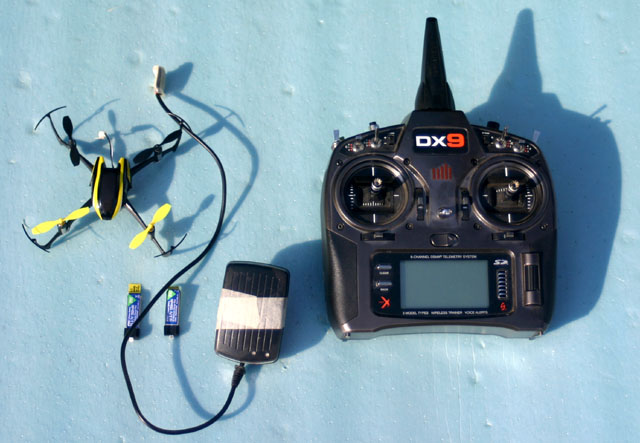
NanoEquipment
What was also appealing to me was that I could use not only a transmitter I had but also several 150 mah Lipo batteries and an AC charger that charges two batteries at a time. I had this equipment because I have three model airplanes that use the same batteries; UMX RadianUMX ASK-21, and AS3Xtra.
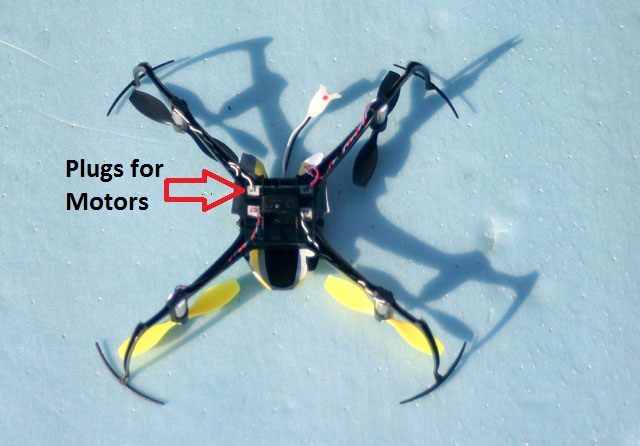
NanoBottom
Another good feature with the Nano is changing motors is easy with the wires and connectors out in the open.
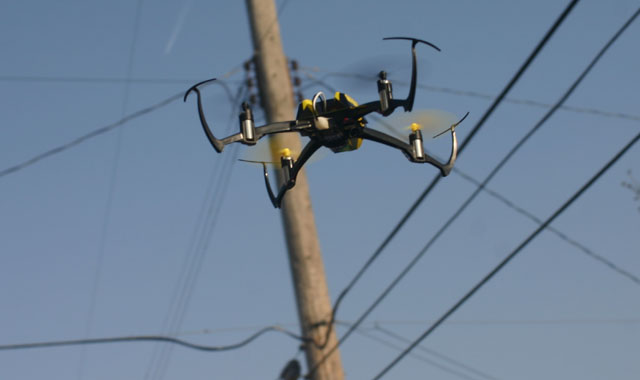
NanoInWeb
Blade Nano in flight, it was rather windy last evening but the tiny quadcopter did pretty well, I noticed it tried to automatically adjust to the gusts of wind.

The tiny connectors that the Nano and the airplanes uses can be a little finicky, I had trouble with the connector on the Nano until I carefully bent up one of the pins. After that plugging the connectors together was easy.  Like any quadcopter you want to make sure you understand the binding and calibration procedures. 

Flying the Nano seems really easy, I was impressed that a quadcopter this small flies so easily. In the advertising Blade stresses that the Nano has S.A.F.E. technology for stability which is an acronym for Sensor Assisted Flight Envelope. There are two flight modes; stability and agility but so far I have left it in stability mode.

NanoWithTx
This is the Nano with included transmitter if not purchased in BNF version.
Bill Kuhl

Monday, April 20, 2015

Great Soaring Combination Activities

This past Saturday was the first of the scheduled monthly soaring events for a group I am in. As luck would have it Friday had been near perfect thermal soaring weather but Saturday had a forecast of high wind. We met at our normal thermal soaring location and caught up on some of the great sailplane talk we had missed over the winter. We also talked about what future options might be when flying from the current field is not possible. It appeared there are options but none are perfect.


Wayne holding Sailaire Fuselage


Vertical Fin Held Together with Tape 


I thought the wind as of yet really wasn't that strong and I wanted to test out my Hyper DLG glider after repairing a broken vertical fin from the day before. There is no covering on the balsa tail surfaces and it breaks very easily if you do not land perfectly straight. Wouldn't you know it I landed a little off again and broke the fin loose. I made a temporary repair with filament tape and it held fine for the rest of my flying.  On several occasions the glider was able to climb in lift to a pretty good height. Problems was about the time the glider was at a good height it was also over a wooded area, I didn't want to risk landing in the trees so brought the glider down, still it was very fun.


Sailaire Stab Half


When I got back by the other pilots it had become a show and tell session also. Wayne had brought out his Sailaire sailplane that he is refurbishing. The fuselage was very heavy but the stabilizer halves which have this intricate wood structure appeared stiff and light. As heavy as this glider is, Wayne said some people will add up to a pound of lead in it to penetrate strong wind, the nickname that people have for this sailplane is the "Whaleaire".


For my afternoon fun, Paul that is a sailplane pilot from an hour away came to my city to fly from an earth dam that faces east-west. It had been awhile since I had flown with Paul and it was good to catch up. He was trying to make the DS work on the side of the dam which was next to the water, a brave pilot I thought. My flying was just on the front side and I tried to keep my glider away from the top of the ridge.


Paul was able to make some DS circuits with the foam gliders he had brought. I picked up a couple of tips from him that I will try another time. The wind was starting to shift so we were going to try another site but then something came up for Paul and I decided I would rather not fly alone, it had been a great day of sailplane fun even if the conditions were never ideal.

Bill Kuhl
http://www.ideas-inspire.com

Short Video Clip of DS 


Thursday, April 16, 2015

Post # 200 & New Articles on Website

This is blog post number 200, Thank you to everyone that has been reading these blog posts, it has been because of the number of views that I have been motivated to keep writing. The total number of views is rapidly approaching 80,000 which I think is pretty good. Some individual posts have had views in the thousands and a couple haven't reached 50 yet, it seems mainly connected to the subject matter.


On my website http://www.ideas-inspire.com I am expanding the material beyond the simple build projects to include more about the model aviation hobbies that I enjoy. There is a new article on Basic Quadcopter that I consider a good start on an article but I am adding to it on a regular basis. Related to this I have a new article written by someone else, Wayne Diercks has an article on his battery testing for the SYMA X5C-1 quadcopter.


 Also in the works is an article about the Guillow's model airplanes. I have built several of their model airplane kits for rubber powered free flight and converted a couple for electric radio control. The quality of these kits has been improving and with some minor changes many of the kits will fly really well.


Check out Building and Flying Guillow's Models Webpage

I hope everyone likes the format I have been trying to follow of limiting the articles to no more than 5 paragraphs with about an equal number of images and possibly a related short video clip.

If you would like to receive an email with the contents of each new blog post subscribe through this link.

Subscribe to Scienceguyorg Ramblings by Email

Bill Kuhl

http://www.ideas-inspire.com